The Makita XFD131 is a compact, cordless drill/driver designed for a wide range of drilling and fastening applications. It’s part of Makita’s 18V LXT series, making it compatible with a large ecosystem of tools and batteries. This drill is aimed towards both DIY enthusiasts and professionals who need a lightweight and versatile tool for everyday tasks. Think of a carpenter using it for installing cabinet hardware, or a homeowner assembling furniture – the XFD131 is built for these scenarios.
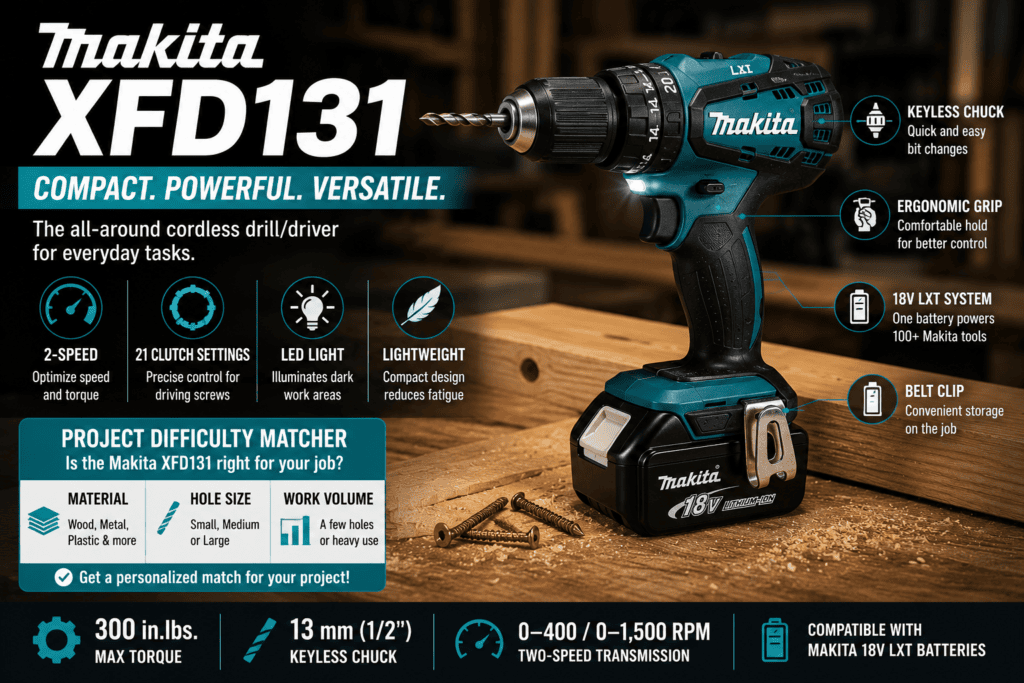
Makita XFD131: Overview and Positioning
The XFD131 occupies a sweet spot in Makita’s extensive cordless drill lineup. It’s not the most powerful, nor the most compact, but it offers a balanced blend of performance and portability. This makes it a solid all-arounder suitable for various materials, including wood, metal, and plastic. Its key selling point is its manageable size and weight, which reduces fatigue during extended use. The drill features a two-speed transmission, allowing users to optimize speed and torque for different applications. The variable speed trigger provides precise control, preventing overdriving screws or damaging delicate materials.
Real-World Performance
While Makita advertises specific torque figures, practical performance is what matters. The XFD131 handles most common drilling tasks with ease. Drilling pilot holes, driving screws of various sizes, and light-duty mixing are all within its capabilities. For larger diameter holes in hardwoods or driving very long screws, it might struggle and require more effort. The two-speed gearbox is useful; the lower speed provides more torque for demanding applications, while the higher speed is ideal for faster drilling. Actual battery life depends heavily on the task, but expect reasonable runtime for typical DIY projects or light professional use.
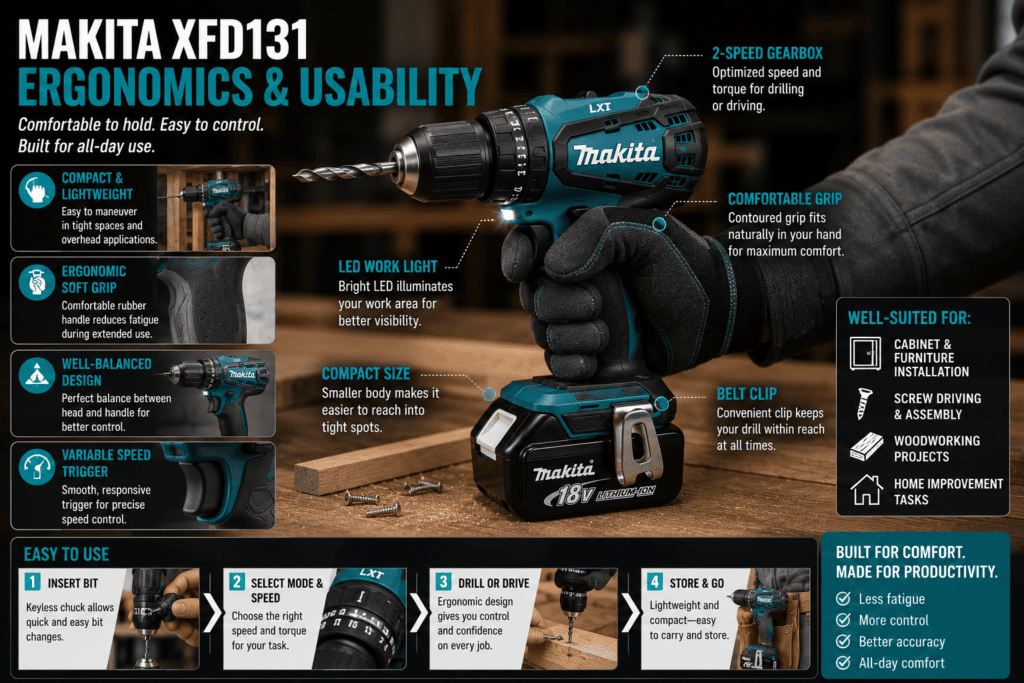
Ergonomics and Usability
The XFD131 shines in ergonomics. The handle is comfortable to grip, even for extended periods. The drill is well-balanced, minimizing wrist strain. The LED work light is a welcome addition, illuminating the work area in dimly lit conditions. The belt clip provides convenient storage when not in use. Changing bits is straightforward thanks to the keyless chuck. The overall design prioritizes ease of use and operator comfort.
Battery and Power Considerations
The XFD131 utilizes Makita’s 18V LXT batteries. Battery capacity affects runtime and, to some extent, power output. Higher amp-hour (Ah) batteries will provide longer runtime, but also add weight. The drill is compatible with a wide range of Makita 18V batteries, allowing users to choose the optimal balance of power and weight for their needs. Charging time depends on the battery and charger used. Makita offers various chargers, including rapid chargers that can significantly reduce downtime.
Project difficulty matcher — is the Makita XFD131 right for your job?
Tell us about your project
Limitations and Trade-offs
As with any tool, the XFD131 has its limitations. It’s not a heavy-duty drill designed for demanding construction tasks. Its torque output is adequate for most applications, but it won’t replace a more powerful hammer drill or impact driver for tougher jobs. The chuck size limits the diameter of drill bits that can be used. While the LED light is helpful, it’s not exceptionally bright. The absence of a side handle might be a drawback for some users when drilling larger holes. Ultimately, the XFD131 prioritizes portability and ease of use over raw power.
Conclusion
The Makita XFD131 is a well-rounded cordless drill/driver suitable for a wide range of users. Its compact size, comfortable ergonomics, and adequate power make it a versatile tool for both DIY projects and light professional applications. While it has limitations in terms of raw power, its overall balance of features and performance makes it a worthwhile addition to any tool collection.
Makita XFD131 Quick Specifications
| Feature | Makita XFD131 |
|---|---|
| Tool Type | Cordless Drill/Driver |
| Battery Platform | Makita 18V LXT |
| Motor Type | Brushed |
| Transmission | 2-Speed Gearbox |
| Chuck Size | 13 mm (1/2″) Keyless |
| Speed Range | 0–500 RPM / 0–1,900 RPM |
| LED Work Light | Yes |
| Variable Speed Trigger | Yes |
| Best For | Wood, plastic, drywall, light metal |
| Not Recommended For | Concrete, masonry, heavy structural drilling |
| Weight | Lightweight and compact design |
| Ideal Users | DIYers, homeowners, installers, maintenance technicians |
Frequently Asked Questions
1. Is the Makita XFD131 good for beginners?
Yes. The Makita XFD131 is lightweight, easy to control, and has a comfortable grip, making it an excellent choice for beginners, homeowners, and DIY enthusiasts.
2. Can the Makita XFD131 drill through metal?
Yes. It can drill through thin steel, aluminum, and other light metals when paired with the correct HSS or cobalt drill bit. It is not intended for heavy industrial steel drilling.
3. What battery works with the Makita XFD131?
The drill is compatible with all Makita 18V LXT lithium-ion batteries, allowing users to share batteries across more than 300 Makita cordless tools.
4. Is the Makita XFD131 suitable for woodworking?
Absolutely. It performs well when drilling pilot holes, driving screws, assembling furniture, building cabinets, and general woodworking projects.
5. Can the Makita XFD131 replace an impact driver?
Not completely. The XFD131 is designed for drilling and general screw driving, while an impact driver delivers much higher torque for driving long screws, lag bolts, and structural fasteners.
6. How long does the battery last?
Runtime depends on the battery size and workload. A 2.0Ah battery is suitable for light DIY work, while a 4.0Ah or 5.0Ah battery provides much longer runtime for larger projects.
7. Does the Makita XFD131 have a brushless motor?
No. The XFD131 uses a brushed motor. While it is reliable for everyday work, brushless models generally offer longer runtime, improved efficiency, and reduced maintenance.
8. What materials can the Makita XFD131 drill into?
It is suitable for wood, plywood, MDF, drywall, plastic, PVC, aluminum, and light steel. It is not recommended for concrete or masonry without a dedicated hammer drill.