ToolCompareHub is an independent power tool review and comparison site run by Samiullah, a qualified Electrical Engineer from Pakistan.
Samiullah holds an engineering degree accredited by the Pakistan Engineering Council (PEC) — a member body of the Washington Accord, an international agreement that recognises engineering qualifications as equivalent across 21 signatory countries including the United States, United Kingdom, Canada, Australia, Japan, and South Korea.
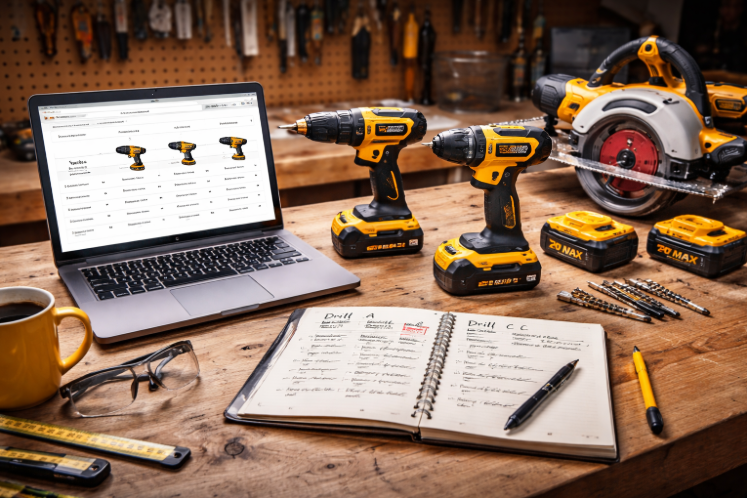
This engineering background is not just a credential on paper. It means every review and comparison on this site is grounded in a genuine understanding of motors, circuits, battery chemistry, torque mechanics, and power delivery — the actual engineering behind the tools being reviewed.
Why This Site Exists
Most tool review sites fall into one of two traps. Either they copy manufacturer spec sheets and call it a review, or they write vague general content that does not actually help anyone decide between two similar products.
ToolCompareHub was built to do something different. The goal is to explain what the specifications actually mean in real-world use — why a 820 in-lb drill is or is not meaningfully better than a 530 in-lb drill for your specific task, what the real difference is between brushless and brushed motors, and when a $99 drill is the smarter choice over a $200 one.
Every guide, comparison, and review on this site is written to answer the questions real buyers actually ask — not to generate clicks or push affiliate products.
What We Cover
ToolCompareHub focuses on cordless power tools and outdoor equipment across six main categories:
- Cordless Drills — detailed reviews and comparisons of drills from DeWalt, Makita, Milwaukee and Ryobi
- Impact Drivers — torque comparisons, use case guides, and model rankings
- Circular Saws — blade selection, cutting depth guides, and cordless vs corded comparisons
- Outdoor Tools — leaf blowers, string trimmers, and cordless garden equipment
- Batteries and Chargers — Ah ratings, platform comparisons, runtime guides, and storage advice
- Buying Guides — practical guides to help readers choose the right tool for their specific situation
How Reviews Are Written
Every piece of content on ToolCompareHub follows a consistent approach:
- Specifications are explained — not just listed. Torque numbers, RPM ratings, Ah capacities are explained in plain language so readers understand what they mean in practice.
- Use cases are identified — every tool review clearly states who the tool is best suited for and who should look at alternatives.
- Limitations are included — a review that only covers strengths is not useful. Every review on this site includes honest limitations.
- Comparisons are practical — side-by-side tables and decision guides help readers compare options without needing to visit five different pages.
Affiliate Disclosure
ToolCompareHub may earn a small commission if you purchase through links on this site, at no additional cost to you. This does not influence which products are reviewed or how they are rated. All opinions are independent and based on engineering analysis and published specifications.
We only recommend products we would genuinely consider buying for the use case described in each review.
Independence and Accuracy
ToolCompareHub is not sponsored by any tool brand. No manufacturer pays for coverage, placement, or positive reviews. All products are evaluated based on published specifications, engineering principles, and independent user data from verified owners.
Where specifications are cited, sources are linked. Where claims are made about real-world performance, they are based on published independent testing data from sources such as Consumer Reports, Popular Mechanics, This Old House, and Pro Tool Reviews.
Contact
For questions, corrections, or collaboration enquiries, use the Contact page.
If you spot an error in any review or comparison, please get in touch — accuracy matters and corrections are made promptly.