A circular saw is only as good as the blade you put in it. Use the wrong blade and you get rough cuts, splintered edges, a blade that burns through material, or worse — a dangerous kickback situation. Use the right blade and cuts become effortless, clean, and fast.
Yet blade selection is one of the most overlooked aspects of using a circular saw. Most beginners grab whatever blade came with the saw and wonder why their cuts look rough or the tool feels like it is struggling.
This guide covers everything you need to know about choosing the right circular saw blade — size, tooth count, material compatibility, blade types, and specific recommendations for common cutting tasks in 2026.
If you are also looking for a circular saw to pair with your blade choice, read our DeWalt 20V Circular Saw Review for a detailed look at one of the most popular cordless options available today.
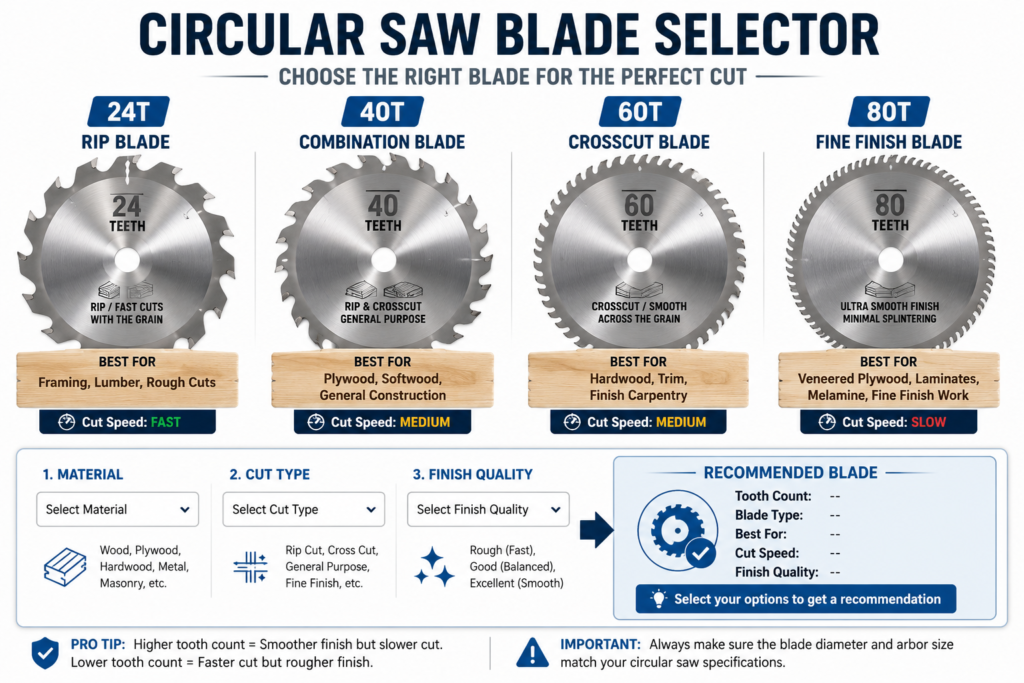
The Four Things That Define a Circular Saw Blade
Every circular saw blade is defined by four key characteristics. Understanding these four things makes every other blade decision straightforward.
1. Blade Diameter
The most important specification — your blade must match your saw. Common sizes are 6.5 inch, 7.25 inch, and 8.25 inch. Most standard circular saws use 7.25 inch blades. Check your saw’s manual before buying any blade — using the wrong diameter is dangerous and can damage both the blade and the saw.
2. Arbor Size
The arbor is the hole in the centre of the blade that fits onto the saw’s spindle. Most saws use a 5/8 inch arbor. Some blades have a 5/8 inch hole with a removable insert that accommodates smaller arbors. Always verify your saw’s arbor size before purchasing.
3. Tooth Count
This is the single most important factor for cut quality. More teeth means smoother, finer cuts. Fewer teeth means faster, rougher cuts. The right tooth count depends entirely on what you are cutting and what finish you need.
4. Tooth Geometry (Grind)
The shape of each tooth affects how it cuts. Different materials require different tooth geometries. Using the wrong geometry can damage both the blade and the material.
Tooth Count Guide — Which to Use for What
| Tooth count | Cut type | Best for | Finish quality |
|---|---|---|---|
| 16–24 teeth | Ripping | Framing lumber, rough cuts with the grain | Rough |
| 40 teeth | General purpose | Plywood, softwood, general construction | Good |
| 60 teeth | Fine crosscutting | Hardwood, trim, finish carpentry | Very good |
| 80+ teeth | Ultra-fine crosscutting | Veneered panels, laminate, melamine | Excellent |
According to Fine Woodworking, the most common mistake beginners make is using a high tooth count blade for rough framing work — it cuts slower, generates more heat, and dulls faster than a lower tooth count blade designed for that purpose.
Blade Types by Material
Wood Cutting Blades
The most common type. These come in ripping blades (fewer teeth, cuts with the grain), crosscut blades (more teeth, cuts across the grain), and combination blades (balanced tooth count for both directions). For most DIYers a quality 40-tooth combination blade handles 80% of wood cutting tasks effectively.
Plywood and Sheet Material Blades
Plywood requires a blade with a high tooth count (60–80 teeth) to prevent the veneer from splintering on the exit side of the cut. The teeth should have an alternate top bevel (ATB) grind. Always support sheet materials properly to prevent the blade from binding.
Metal Cutting Blades
Standard wood blades will destroy themselves on metal. Metal cutting blades use carbide teeth with a triple chip grind (TCG) designed to handle the hardness of aluminium, steel, and other metals. These blades run at slower speeds — always check the RPM rating matches your saw.
Masonry Blades
These are abrasive diamond or silicon carbide blades with no teeth at all — they cut through friction rather than slicing. Used for concrete, brick, tile, and stone. These generate significant dust and heat — always use appropriate respiratory protection and eye protection.
Fibre Cement Blades
Fibre cement siding requires a specialised blade with polycrystalline diamond (PCD) tips. Standard blades dull almost instantly on this material. If you are cutting fibre cement cladding, investing in a purpose-built blade saves significant time and money in the long run.
Blade Material — What the Teeth Are Made From
| Material | Durability | Cost | Best for |
|---|---|---|---|
| High Speed Steel (HSS) | Low | Cheapest | Occasional light wood cutting |
| Carbide Tipped (TCT) | High | Mid range | Most wood and general cutting |
| Diamond | Very high | Expensive | Masonry, tile, and hard materials |
| Polycrystalline Diamond (PCD) | Extremely high | Most expensive | Fibre cement and abrasive materials |
For most DIY and professional wood cutting, carbide tipped (TCT) blades are the right choice. They last significantly longer than HSS blades, can be resharpened professionally, and deliver clean cuts across a wide range of wood types. According to This Old House, a quality carbide tipped blade from a reputable brand will outlast a cheap HSS blade by a factor of 10 to 20 in typical use.
Top Circular Saw Blade Recommendations for 2026
| Blade | Teeth | Best for | Price range |
|---|---|---|---|
| Diablo D0724A | 24 | Framing and rough cuts | $10–$15 |
| Diablo D0740A | 40 | General purpose wood cutting | $15–$20 |
| Freud LU79R007 | 40 | Combination ripping and crosscutting | $30–$40 |
| Diablo D0760A | 60 | Plywood and finish cuts | $20–$30 |
| DeWalt DW3128P5 | 28 + 80 | Value combo pack (2 blades) | $25–$35 |
Common Blade Mistakes to Avoid
- Using a dull blade. A dull blade requires more force, generates more heat, creates rougher cuts, and dramatically increases kickback risk. Replace or resharpen blades when they feel like they are working harder than usual.
- Wrong blade for the material. Using a wood blade on metal or masonry destroys the blade immediately and creates a serious safety risk.
- Incorrect blade depth. Set blade depth so the blade extends approximately 6mm below the material being cut. Too deep increases kickback risk. Too shallow reduces cutting efficiency.
- Ignoring RPM ratings. Every blade has a maximum RPM rating. Using a blade on a saw that exceeds its rated speed is extremely dangerous. Always verify compatibility before use.
- Skipping the blade guard. The blade guard exists for a reason. Never remove or disable it for convenience.
According to the U.S. Consumer Product Safety Commission, circular saws are among the most common causes of serious workshop injuries — the majority of which involve improper blade use or bypassed safety features.
Quick Blade Selection Guide
| You are cutting | Choose this |
|---|---|
| Framing lumber, 2x4s, rough work | 24-tooth carbide framing blade |
| Plywood sheets | 60-tooth ATB blade |
| Hardwood, finish carpentry | 60–80 tooth crosscut blade |
| Melamine or laminate panels | 80+ tooth TCG blade |
| Aluminium or thin steel | Metal cutting TCG carbide blade |
| Concrete, brick, tile | Diamond abrasive blade |
| Mixed materials, general use | 40-tooth combination carbide blade |
Frequently Asked Questions
How often should I replace my circular saw blade?
A carbide tipped blade used for typical DIY work can last years before needing replacement or resharpening. Signs that a blade needs attention include burning smells during cutting, increased effort required to push through material, rough or splintered cut edges, and visible tooth damage. Do not wait until a blade is completely dull — a sharp blade is always safer and more efficient.
Can I sharpen a circular saw blade myself?
Carbide tipped blades can be resharpened professionally and are worth doing for quality blades. DIY sharpening of carbide teeth requires a diamond file and is possible but time-consuming and difficult to do accurately. HSS blades can be sharpened with a standard file but rarely justify the effort given their low replacement cost. For most users, replacing a worn blade is more practical than sharpening.
What does ATB mean on a circular saw blade?
ATB stands for Alternate Top Bevel. It means the teeth alternate between left and right beveled angles. This geometry produces very clean cuts in wood and plywood by slicing cleanly through fibres on both sides of the cut. ATB blades are the most common tooth geometry for wood cutting applications.
Is a more expensive blade worth it?
For regular use, yes. Premium blades from brands like Diablo, Freud, and DeWalt use higher-grade carbide, tighter manufacturing tolerances, and anti-vibration slots that produce cleaner cuts and last significantly longer than budget blades. For occasional use, a mid-range blade is perfectly adequate. For professional use or regular DIY, investing in quality blades pays off in performance and longevity.
Why does my circular saw blade burn the wood?
Burning is usually caused by one of three things: a dull blade, a blade with too many teeth for the type of cut being made (too many teeth in a rip cut, for example), or feeding the material too slowly. A 24-tooth ripping blade moving quickly through pine should never burn. A 60-tooth crosscut blade moved slowly through the same material will burn significantly.
What is the safest way to change a circular saw blade?
Always disconnect the tool from its power source first — remove the battery on a cordless saw or unplug a corded saw. Use the spindle lock button to hold the arbor still, then use the correct wrench to loosen the arbor nut (note that many saws use left-hand thread on the arbor nut). Wear cut-resistant gloves when handling blades. Never attempt to change a blade while the saw is connected to power.
the following tool will help in this regard to take the decision.